
Dani Roves the World contains affiliate links and is a member of the Amazon Services LLC Associates Program. If you make a purchase using one of the Amazon or affiliate links, I may receive a small compensation at no extra cost to you. See my Disclosure Policy for more information.
Let me be honest. My first day trip to Mt. Fuji from Tokyo was a mess. If you’re planning a Mt Fuji day trip from Tokyo, choosing the right tour makes a huge difference.
I booked a tour because it looked easy. Smooth transport, gorgeous stops, minimal thinking required. Instead, it was a blur of bus rides and rushed views. I barely had time to take a photo before we were off to the next location.
That first tour is no longer available, which feels a little like karma.
The second time, I did it differently. I booked a better tour, one that actually gave me time to soak in the views, enjoy the food, and make memories that weren’t just photos snapped out of a bus window.
This post is for you if you’re planning a Mt. Fuji day trip from Tokyo and want to avoid the chaos I stumbled into. I’m breaking down the stops, sharing what to actually expect, and pointing you to the best tour to book if you want an easy and enjoyable day.
Let me walk you through what worked, what flopped, and how to plan a day trip that actually feels like a getaway.
Check availability for the Mt Fuji tour I recommend here before spots fill up.

What a Mt Fuji Day Trip from Tokyo Actually Looks Like
Most Mt Fuji day tours from Tokyo last 10 to 12 hours.
You’ll typically leave Tokyo around 7–8 AM and return in the evening.
Most tours visit several highlights around the Fuji Five Lakes region, including:
- Lake Kawaguchiko
- Oishi Park
- Oshino Hakkai
- Chureito Pagoda
Some tours also include Mt Fuji 5th Station depending on weather and season.
Because the distance from Tokyo to Mt Fuji is around 2 hours each way, choosing a well-paced tour matters a lot.
That’s exactly why my first tour felt rushed and the second one felt completely different.
Oishi Park: A Quiet Surprise with Lavender Ice Cream and Fuji Views
Oishi Park was our first stop, and to be honest, I didn’t expect much. It was December, which isn’t exactly flower season in Japan, and I assumed we’d just get a quick photo op and move on.
But the park surprised me.
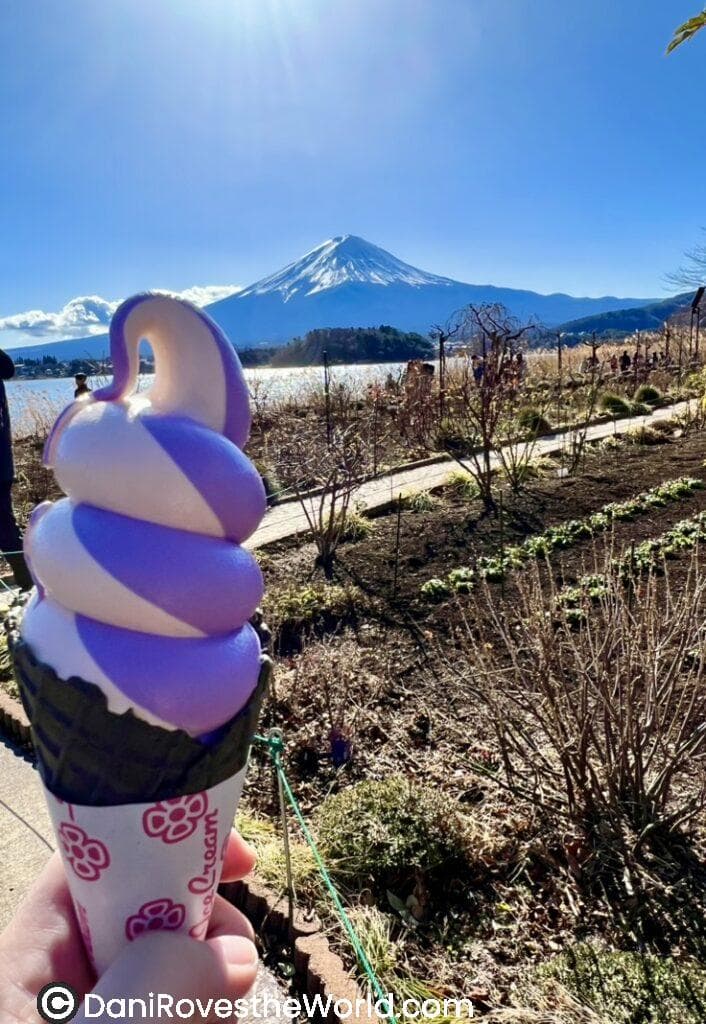
The air was cold and crisp in that way only mountain towns can be. Mt. Fuji stood tall in the distance, snow-capped and perfectly framed by the quiet waters of Lake Kawaguchiko. It was the kind of view you imagine when you think of Japan — postcard-perfect and still.
And then came the ice cream.
Lavender and sakura, in the middle of winter. I don’t know who decided that was a good idea, but I would personally like to thank them. The flavors were subtle, floral, and completely unlike anything I’d had before. I stood there in gloves and a puffy jacket, happily shivering and licking my cone while staring at Fuji like a total tourist. Worth it.
If you’re visiting Oishi Park, here’s what I recommend:
- Take your time. The tour I booked the second time actually gave us space to wander, take photos, and enjoy the moment. It made a huge difference.
- Visit the Kawaguchiko Natural Living Center. This cozy shop in the park sells lavender-themed souvenirs and has a little café that’s perfect for warming up.
- Try the seasonal snacks. If you see the lavender-sakura ice cream, trust me — get it.
You don’t need to plan this stop yourself. The tour I recommend includes Oishi Park and builds in enough time so you’re not sprinting back to the bus mid-cone.
First stop: . Now, I wasn’t expecting much in December, but this park surprised me in the most delightful way.
Picture this: crisp mountain air, the sun peeking through the trees, and me devouring the most incredible lavender and sakura ice cream.
Yes, you read that right: lavender and sakura! Apparently, Japan does flavors differently, and I’m here for it.
Reserve the Mt Fuji day tour I took the second time here. This one actually gives you time to enjoy the stops.
Oshino Hakkai: Gorgeous Views, Crowds, and Ramen I Never Got to Eat
Oshino Hakkai was the stop I was most excited for. I’d seen dreamy photos of its traditional wooden buildings, canals, and spring-fed ponds with Mt. Fuji perfectly reflected in the water. It’s the kind of place that looks too perfect to be real.
And visually? It delivered.
The ponds were crystal clear. You could see the water bubbling up from underground, and the pebbles looked like they’d been placed there by a designer. Mt. Fuji hovered in the background like it was waiting for a photo op. It felt like stepping into a screensaver.
But, and there’s always a but, it was a national holiday.
Which meant everyone had the same idea.
The narrow streets were shoulder-to-shoulder. Every ramen shop had a line that looked like it wrapped around the block. I ended up grabbing a snack from a street vendor and watching others eat steamy bowls of noodles from afar, wondering what could have been.
Still, even with the crowds, Oshino Hakkai was one of the most photogenic stops of the day.
If you’re visiting Oshino Hakkai, here’s what you should know:
- Avoid holidays if you can. If you want to enjoy the peace this place is known for, check the Japanese calendar before you go.
- Bring a snack just in case you can’t get into a restaurant. I was seriously hangry by the time we left.
- The views are worth it. Even if it’s busy, the reflections of Mt. Fuji in the ponds are stunning and worth the trip.
On a quieter day, I’d go back in a heartbeat. I’d plan to sit down at one of those cozy restaurants, order a proper meal, and actually relax while soaking up the scenery.
If you want a day trip that includes Oshino Hakkai without the stress of figuring out buses or timing? This is the tour that got it right for me.
→ Book the Mt. Fuji day tour I actually recommend. Pick this one, not the rushed mess I did the first time.
Click Here

Lawson: The Konbini Stop That Made No Sense
One of the more confusing parts of the tour? A stop at a Lawson.
Yes, the convenience store.
Now, I love a good Japanese konbini moment. I’ve fueled entire day trips on onigiri and canned coffee. But pulling up to a random Lawson in the middle of a Mt. Fuji tour felt… odd.
Mt. Fuji was literally glowing behind us, and our group was scattered around a parking lot buying bottled tea and KitKats. There wasn’t even a scenic overlook or cultural context. Just fluorescent lights and an aggressively normal store.
If I had to guess, it was probably a bathroom break disguised as a snack stop. But it definitely could have been better planned.
Tip: If your tour stops at a convenience store, use the time to stretch your legs and grab any essentials you forgot. Don’t expect it to be part of the experience. It’s not.

Chureito Pagoda: The View That Left Me Breathless (Literally)
This was the highlight of the entire day trip. Nothing else came close.
Chureito Pagoda is one of those places that feels like a dream until you’re standing there, staring at Mt. Fuji rising behind that perfect red pagoda. It’s the postcard shot. The one you’ve seen a thousand times and secretly wondered if it’s really that good.
It is.
But first, you have to get there. And that means stairs. Around 400 of them.
I started the climb feeling optimistic. Ten minutes later, I was gasping like I’d just run a marathon. At one point, I seriously considered just laying down and letting the other tourists step over me.
Eventually, I reached the top, red-faced and wheezing, and the view hit me so hard I forgot to take a photo at first. Snow-capped Fuji, surrounded by soft clouds and distant bells from the nearby shrine. I just stood there in silence.
And then I cried. Not a lot. Just a little misty moment brought on by exhaustion, beauty, and maybe the sugar crash from that lavender ice cream.
If you’re planning to visit Chureito Pagoda, here’s what helped me:
- There’s a ramp. I took the stairs up but found out there’s a sloped path on the way down. If you want to skip the stairmaster workout, use it both ways.
- Go early or late. This spot gets crowded fast. Sunrise or late afternoon light is gorgeous and less packed.
- Give yourself time. This isn’t a stop you want to rush through. It’s peaceful, photogenic, and emotional if you let it be.
Chureito is included in the Mt. Fuji tour I took the second time, and I’m so glad it was. We actually had enough time to take in the view, visit the shrine, and not feel like we were racing back to the bus.
→ Book the Mt. Fuji tour that includes Chureito Pagoda
Trust me, this is the shot you’ll remember.
Best Time to Visit Mt Fuji
Mt Fuji is visible year round, but weather conditions change the experience quite a bit.
Best months for clear views:
October
November
December
January
February
Winter has the clearest skies, which is why my December visit had such incredible views.
Summer can be beautiful too, but Fuji is often hidden behind clouds.
If seeing the mountain clearly is your priority, late fall through winter is your best bet.
Planning Your Mt. Fuji Day Trip: What I Learned the Hard Way
This trip reminded me why I love solo travel so much. Even the messy moments become good stories later. If you’re spending a few days in Tokyo before heading to Fuji, I mapped out how I usually structure my time in the city in this 3 day Tokyo itinerary.
Was it perfect? No. I had a few hangry moments and more bus time than I’d like to admit.
But it was worth it.
If you’re thinking about a Mt. Fuji day trip from Tokyo, here’s what I’d say: pick the tour that gives you time to actually enjoy it. Don’t rush from place to place like I did the first time. You deserve better than a whirlwind photo op.
The second tour I took gave me space to explore, eat, rest, and feel present. I’m genuinely glad I went back and did it right.
If you want the same experience, skip the guessing and book the tour that finally got it right for me.
If you want a Mt Fuji day trip that doesn’t feel rushed, check availability for the tour I recommend here.
FAQ about a Day Trip to Mt. Fuji
Can you do Mt. Fuji as a day trip from Tokyo?
Yes, and it’s 100% worth it. A full day is enough to see several key spots like Lake Kawaguchiko, Chureito Pagoda, and Oshino Hakkai. You’ll be tired by the end, but in the best way.
How long does it take to get to Mt. Fuji from Tokyo?
By bus or car, expect 2 to 3 hours depending on traffic. Trains are another option but require transfers. I personally recommend a guided tour if you want to skip the planning and avoid figuring out transfers on your own.
Is one day enough for Fuji?
One day is enough to soak in Fuji’s beauty and visit spots like Lake Kawaguchiko, but you’ll only scratch the surface of the area.
How can you get from Tokyo to Mt. Fuji?
Here are your options:
By Train: JR Chuo Line to Otsuki, then transfer to the Fujikyu Railway to Kawaguchiko Station. About 2 hours total.
By Bus: Direct highway buses from Shinjuku or Tokyo Station take 2 to 2.5 hours.
By Car: Also around 2–3 hours, but factor in tolls and possible traffic.
By Tour: Easiest option, especially if you want to sit back, relax, and actually enjoy the views.
What is the best Mt Fuji tour from Tokyo?
There are dozens of Mt Fuji tours departing from Tokyo, but the best ones balance transportation time with enough time at each stop.
Look for tours that include Lake Kawaguchiko, Oshino Hakkai, and Chureito Pagoda, and that allow time to actually explore instead of rushing between photo stops.
The tour I recommend in this guide is the one that gave me the best experience on my second visit.
Should You Do Mt Fuji as a Day Trip or Stay Overnight?
Many travelers wonder whether it’s better to do a Mt Fuji day trip from Tokyo or stay overnight near the mountain.
A day trip works well if you’re short on time and want to see highlights like Lake Kawaguchiko, Oshino Hakkai, and Chureito Pagoda.
However, staying overnight in the Fuji Five Lakes area lets you:
see Mt Fuji at sunrise
avoid tour crowds
explore smaller lakes and villages
If you only have a few days in Japan, a well planned day tour from Tokyo is usually the easiest option.
